Starting in Uganda. Connecting across East Africa.
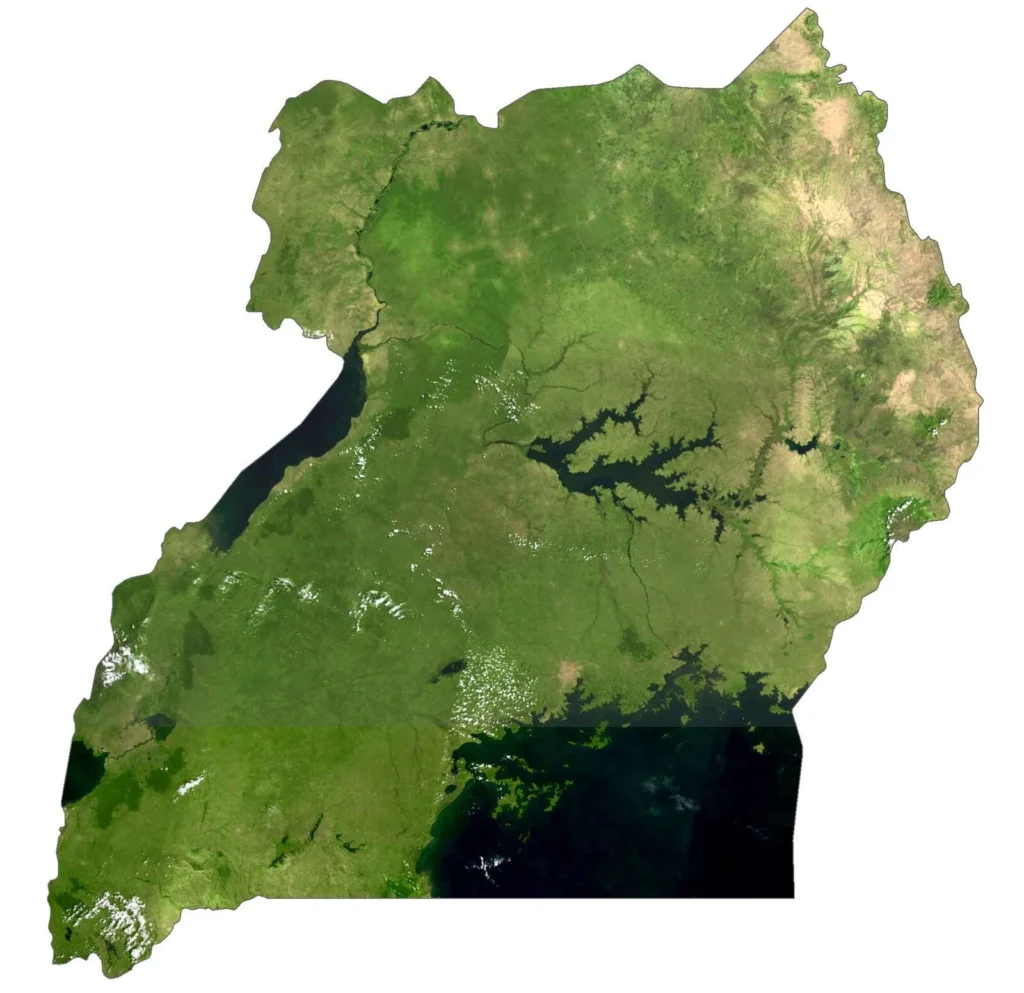
Uganda
OHH’s initial geographic focus is Uganda, with attention to diverse settings, including lakeshores, rural and underserved communities, conservation landscapes, and other human–animal–ecosystem interfaces.
In Uganda, OHH uses a Hybrid Eco-Administrative “Clustered District” Landscape Model that intentionally integrates ecological realities with Uganda’s decentralized local government structure.
This model anchors critical ecological systems within clusters of contiguous District Local Governments. It enables OHH to track the movement of people, animals, pathogens, and environmental change across landscapes while working through existing five-tier local government coordination mechanisms. In doing so, OHH avoids creating parallel structures and instead strengthens community-level intelligence, district technical capacity, and multi-sectoral platforms.
The approach directly supports the organization’s flagship One Health in Motion Framework by linking ecological connectivity with practical governance pathways. It positions OHH as a complementary actor that bridges communities, district governments, national institutions, research partners, and conservation actors.
OHH’s initial operational footprint is organized around four strategic regional landscapes, each with a distinct eco-health profile that maps to the organization’s strategic pillars:
Albertine Rift Ecosystem Cluster:
Focus: High-risk human–wildlife–livestock interfaces, zoonotic disease prevention, conservation buffer zones, and rapidly changing land-use dynamics.
Karamoja Transboundary Cluster:
Focus: Pastoral mobility, livestock health, transboundary biosecurity, rangeland management, and climate adaptation in dryland ecosystems.
Lake Kyoga Basin Cluster:
Focus: Wetland ecosystem health, water-related disease risks, flooding resilience, sustainable livelihoods, and food-water security.
Elgon Highland & Transboundar Cluster:
Focus: Fragile Mountain ecosystems, climate-related vulnerabilities, population pressure, disaster risks, and emerging zoonotic threats within a transboundary East African context.